We visited Delta, Utah 100 years after the birth of Robert “Bob” Mack Twitchell (1925–2015), having just read the descriptions of the town by Robert’s father John Mac Twitchell (1889–1967) as he surveyed where to establish home.
City Proper
“The town consists of nine hundred and sixty acres with broad streets and cement sidewalks. No crossing to speak of so you get muddy crossing the street.
“Two drug stores, four hotels, two restaurants, four garages, picture show, two churches, two large seed houses, flour mill, sugar factory, two millinery stores, shoe shop, jewelry store, laundry, barber shops, several groceries, meat market and hardware and clothing stores. They claim a population of two thousand.”
“Electric lights and sewer in town but no city water. Everyone had their own well and few of them are artesian. It is good water tho.”
“Have not seen any country around it yet that amounted to anything. On the road in the country was all sage brush.”
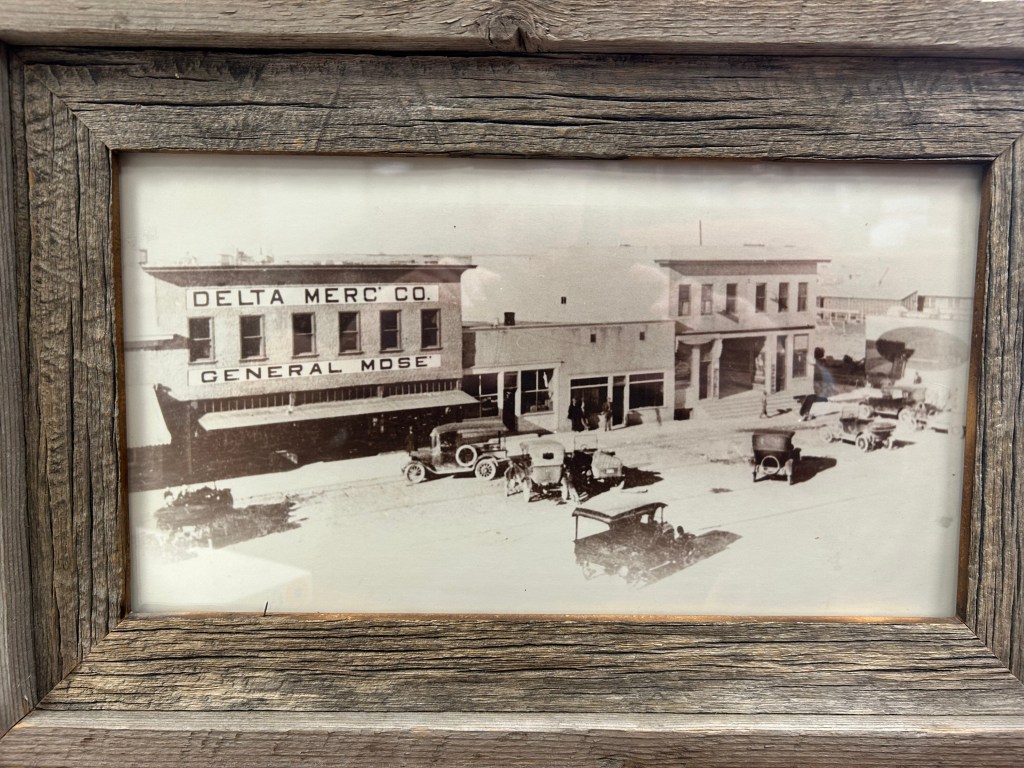
We were surprised to learn Delta was only settled in 1907, just 15 years before this description. The town had not been around for too long. The town librarian was helpful in finding some pictures of the town perhaps near the time like this one.
Transportation
“Delta is on the main line of the Salt Lake and Los Angeles R.R [Railroad] which is controlled by the Union Pacific. A branch line runs East to Holden and Fillmore with a train three times a week. Another line runs North and West to Sutherland, Lucerne, Woodrow and Sugarville, also Southwest to Hinkley and Deseret. All of the trade comes to or thur Delta. . . . Fillmore used to be the State Capital in the old days of stage coaches and Pony Express.”
“It is on the main highway to San Francisco so there is a good road east and west at least.” “The roads are the worst objection I see to the place. They are adobe and either good and slippery or rough and chucky. No danger of breaking the speed limit, come nearer to breaking all the springs. They are gradually improving them and where they are surfaced they make a fine road.”
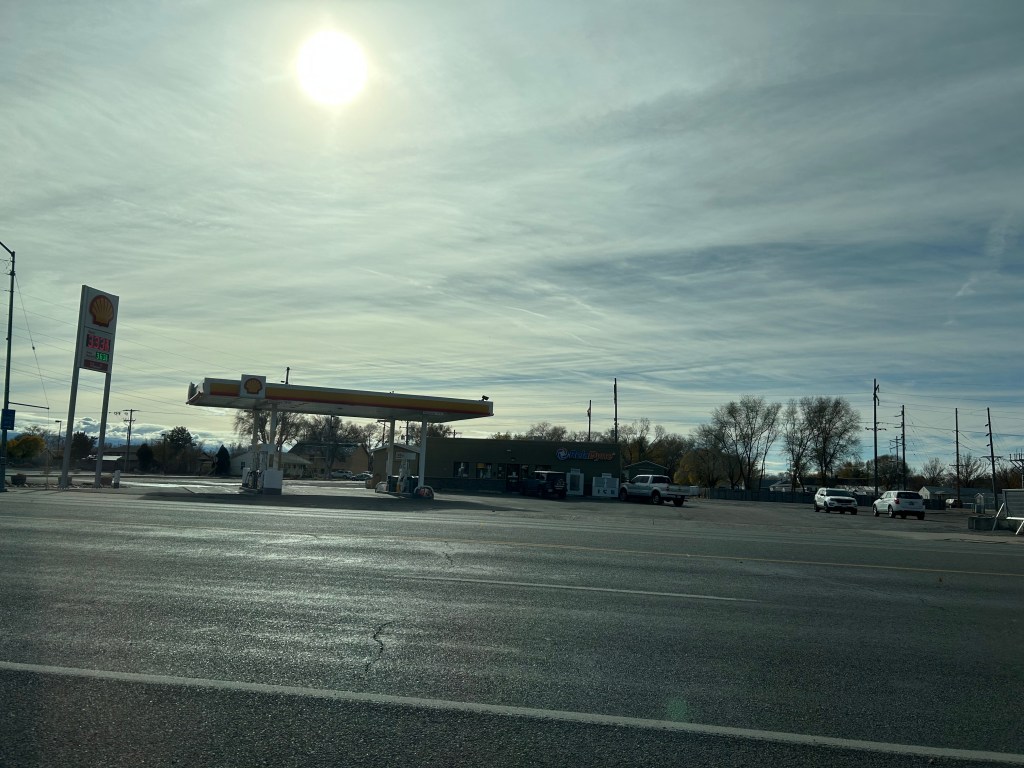
Today, like nearly all Utah towns, Delta has wide streets even. This spot, across from the town square, was likely the place of Paxton Hotel Mac stayed at.
Hotel
“I have a nice large room at the Paxton Hotel. It is on the North East corner, two windows, one on the East and one on the North, overlooking Clark Street, principal thorofare to the High School and grade schools. The school grounds occupy an entire block and that means some thing in this town. The East window looks down Clark Street so that I get a good view of the people going to the community church next to the Hotel.”
The current city center is where the high school was at the time, across the street from the hotel.
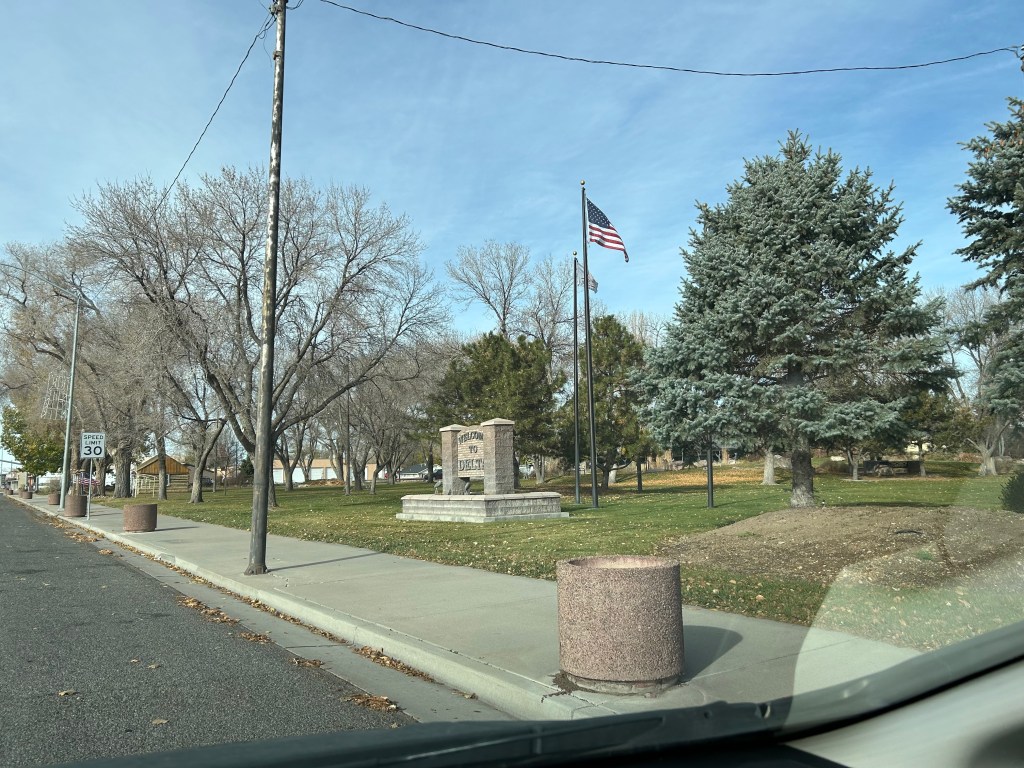
“Have steam heat and hot and cold water in the room. No telephone as yet, but there is one in the lobby and they are very nice and accommodating about calling me to the phone or taking down calls for me. I say they for there is Mr and Mrs Paxton and two girls. . . .
“I let the car stand out in the street. It usually has the company of four or five more and as it looks the poorest, I do not believe there is much danger.”
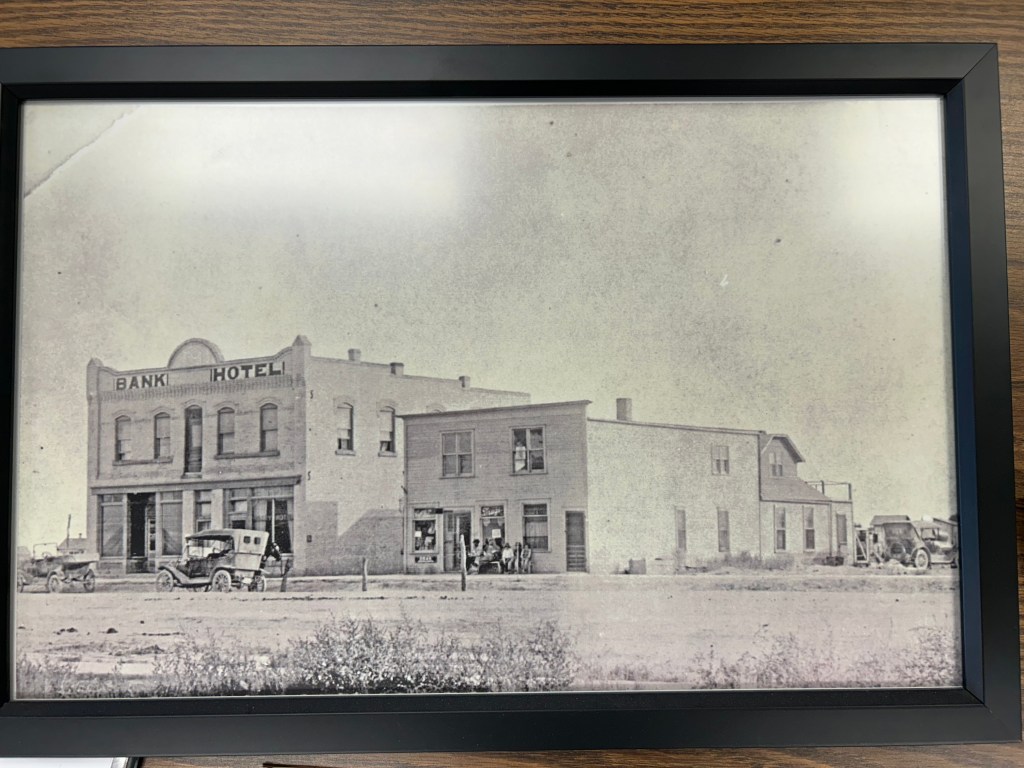
The local librarian thought this hotel might have been named the Paxton Hotel before this picture was taken. At a minimum the hotel likely looked like this, on similar streets and surroundings.
Social
Mac was not a member of the church when he visited in 1923. “One man told be that the Mormons here had certainly treated him fine for the five years that he has been here. We were interrupted and I have not heard religion mentioned elsewhere. Everyone has certainly given me the glad hand and done everything they could for me.”
“They have services two or three times each Sunday. They all went at ten this morning and are all going again now at two. Several good looking ladies have gone by but none of them that come up to you. Now that on on the square dear.”
“The commercial club is a live organization. They have a program and dance to morrow night. The governor is to be here so I reckon there will be a big crowd out. Fred and I plan on taking in the program and maybe he will dance. I might if I could but haven’t learned yet and doubt if I will.”
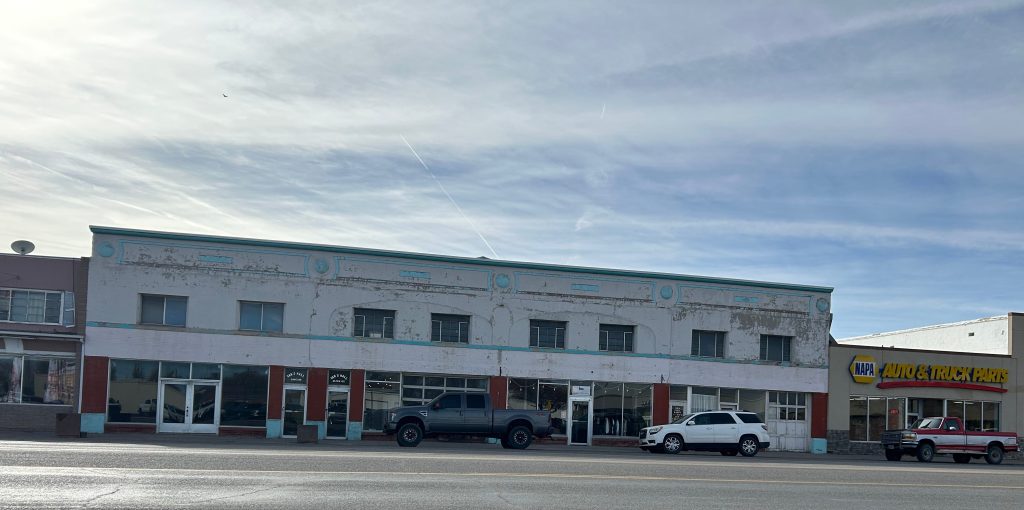
This is one of the very few buildings that might have been standing in 1923. The second level was the dance hall, and was likely where the governor spoke that night.
Agriculture
As a veterinarian, Mac was clearly interested in the agriculture of the area. “There is a vet at Fillmore but none West.” “Their principal crop is alfalfa seed. They claim that Millard County ranks first in the U.S. as to quality and quantity of seed produced.”
“The first cutting of alfalfa is put up for hay and the second allowed to go to seed and thrashed. Then of course the crop has a fair feeding value. . . . . There is a great deal of land to be reclaimed yet and it is being done rapidly. The valley is a large one with ranges a great deal as they are there but talk about your beautiful sunsets.”
“Dairy business is increasing and they already have a number of good herds.” “They have good horses, good jersey, durham and holstein cows and good hogs. All worth more than enough to pay a vet’s fee. They are bound to make money in that kind of farming and do.”
“The land here is all drained and irrigated. Rather all of it is that under cultivation. There are three different drainage tracts containing from forty to forty five thousand acres each. There are two tile drains to each forty acres, the land being bonded to pay off sixty dollars an acre in twenty years. . . . The water for irrigating is taken from the Sevier river by means of hydraulic cams. This costs about one dollar per acre a year. The main crop is alfalfa, tho grain, spuds and sugar beets are raised successfully.”
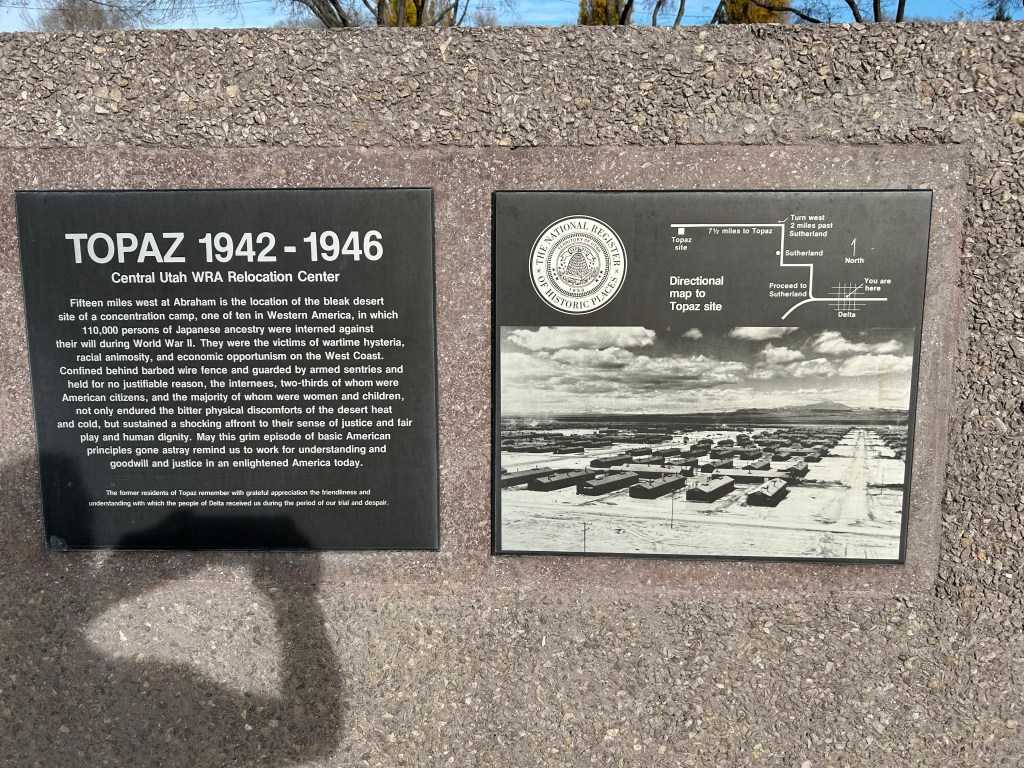
One of the more prominent parts of town today only survived a few years during Bob’s time there, the Topaz Japanese Interment Camp. Bob mentioned he worked at camp a bit as a young man. Here is the memorial to the camp there today.
Bob’s Time in Delta
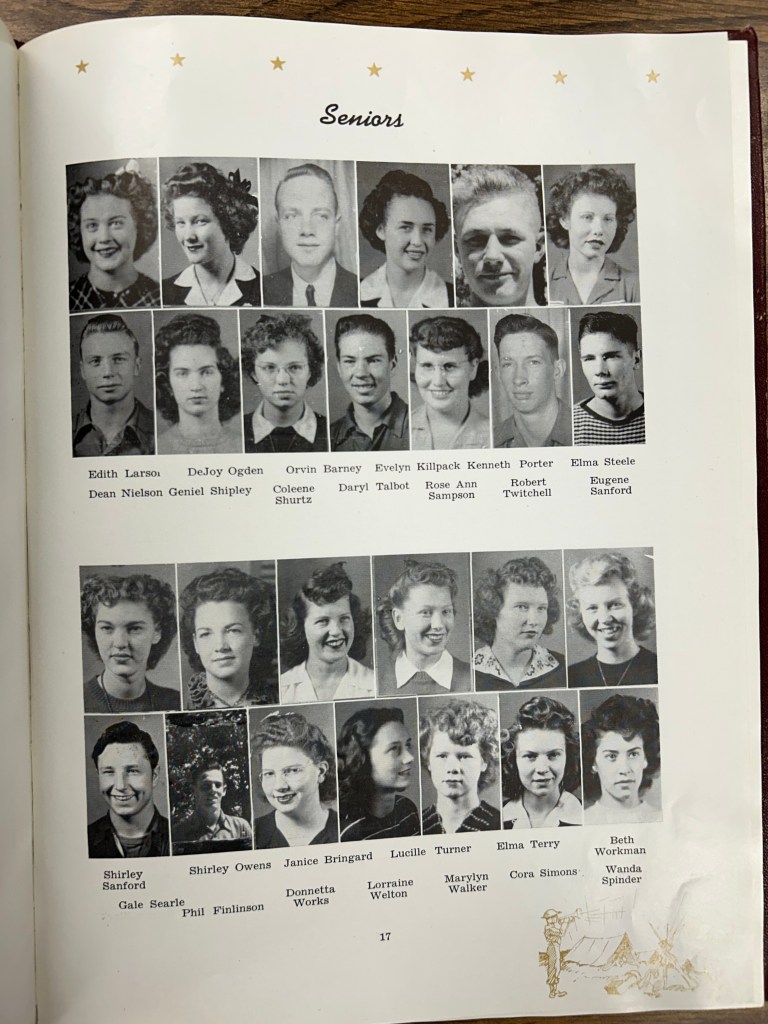
Although not a lot of structures exist from Bob’s time in Delta, the library has a copy of his senior year book. Here is Bob’s senior class picture, Robert Twitchell.
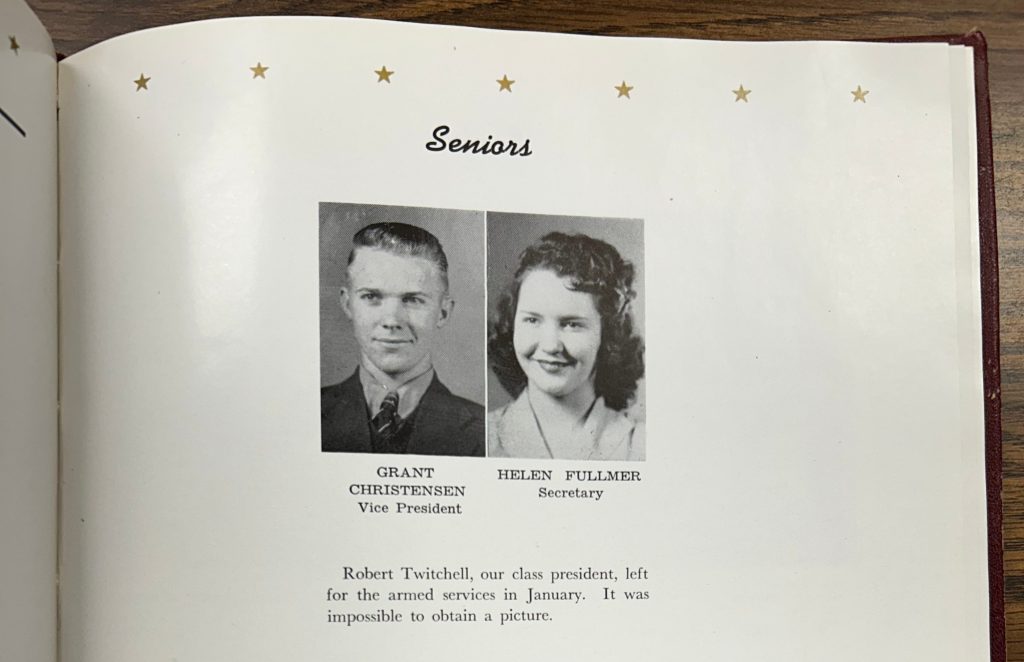
The family lived in town for perhaps 20 years, moving to Provo after Bob was in the army for World War II. In fact, Bob registered for the army November of his senior year, as noted in the below picture where he was not pictured.
As we left town, we reflected upon the environment that had heavily influenced Bob through his childhood, and all he learned in the process.

 Twitchell Ancestry
Leave a reply to Mac Trip to Delta Utah 1923 – Twitchell Ancestry Cancel reply